Winter tyres and snow chains in Italy and Spain: 2026-2027 rules
In Italy, winter tyres or chains on board are compulsory from 15 November to 15 April, but only on roads covered by an ordinance, and some mountain roads start earlier. In Spain there is no calendar: the R-412 sign decides, and the DGT only accepts 3PMSF tyres in place of chains.
Key points
- Italy: winter tyres or chains on board from 15 November to 15 April, only where a sign announces the ordinance.
- Last season, the roads to Bormio and Livigno kept the obligation until 30 April, and the Aosta Valley started on 15 October.
- Spain: no fixed dates. The R-412 sign requires chains, authorised devices or snow tyres; the new R-412b requires winter tyres.
- For the DGT, only 3PMSF tyres can replace chains; the M+S marking alone cannot.
- Since 1 October 2026, overtaking is banned on Spanish motorways made difficult by snow.
Italy: an obligation set road by road
Italy has no single national winter tyre law that applies everywhere. Article 6 of the Codice della Strada allows the authority that owns or runs a road to impose, by ordinance, winter tyres fitted or snow chains on board. To stop every region doing its own thing, a directive from the Ministry of Infrastructure and Transport dated 16 January 2013 asks road operators to use the same window: from 15 November to 15 April.
In practice, this means three things for a driver:
- the rule applies only on roads and motorway stretches covered by an ordinance, mainly outside towns and on routes where snow and freezing rain are frequent;
- a town can adopt the same measure inside its own streets;
- an operator may set a longer period on particular roads, and the directive itself gives high mountain roads as the example.
The Polizia di Stato says the same thing in plainer words: the dates can change in some mountain areas and in the north of the country, and in some areas the obligation does not apply at all.
How to recognise the signs
The directive provides a model sign. At the top, two symbols: a tyre and a tyre with a chain. Below, a panel that reads “obbligo di pneumatici invernali o catene a bordo”, then a supplementary plate with the dates and, often, the stretch concerned. The background colour of the main panel tells you the type of road: green on motorways, blue on other roads outside towns, white in towns. Near the borders, the wording must be bilingual.
Once you pass that sign, you must already have the equipment on board. Looking for chains after the sign is too late.
Tyres or chains: what counts in Italy
The ordinance gives you a choice: winter tyres fitted, or anti skid devices on board. You do not need both.
Winter tyres. The directive accepts tyres approved under the relevant European directive or UNECE regulation, with the approval mark. The Polizia di Stato explains that you recognise them by the marking M+S, MS, M-S or M&S on the sidewall. The ministry recommends fitting them on all four wheels of a car, so that grip is the same front and rear.
Chains on board. They must be compatible with your tyre size and, when you fit them, you follow the instructions of the vehicle maker and of the chain maker. The directive is clear on one point that many drivers get wrong: chains go at least on the wheels of the driving axle. On a front wheel drive car, that means the front.
Studded tyres. They are allowed for driving on ice, and on cars they must be fitted on every wheel.
Motorbikes and mopeds. During the period of the ordinance, two wheeled vehicles may only ride when there is no snow or ice on the road and no snow falling.
What happens if you are stopped without the equipment? According to the Polizia di Stato, you face a fine and the officer orders you not to continue your journey until you have the required devices. For a holiday, the real cost is the lost day, not only the fine.
Roads to the ski resorts: last season’s dates
Here is the trap for anyone heading to the Alps: the “15 November” date is a default, not a promise. On several national roads that lead to well known resorts, ANAS applied different dates during the 2025-2026 season, according to its official list updated on 12 November 2025.
| Road | Resort it serves | Period in 2025-2026 |
|---|---|---|
| SS 38 dello Stelvio and Variante di Bormio | Bormio | 1 November to 30 April |
| SS 301 del Foscagno | Livigno, over the Foscagno pass | 1 November to 30 April |
| SS 26 and SS 26 dir della Valle d’Aosta | Courmayeur | 15 October to 15 April |
| SS 51 di Alemagna | Cortina d’Ampezzo | 15 November to 15 April |
On the motorway network, Autostrade per l’Italia applies the obligation from 15 November to 15 April on most of its stretches subject to an ordinance, and from 1 November on some of them.
Two lessons follow. In Valtellina, the obligation lasted until the end of April, two weeks longer than elsewhere. In the Aosta Valley, it started a full month early, in mid October. The ordinances for 2026-2027 had not yet been published when we checked this article, so treat these dates as a strong hint, not as the rule for this winter.
Spain: no calendar, signs that change with the weather
Spain works the other way round. There is no fixed period: the obligation appears when snow does, and it is shown by signs, often on variable message panels.
The key sign is the R-412 “Cadenas para nieve”: a round blue sign with a tyre fitted with chains. Since the catalogue of road signs was updated by Royal Decree 465/2025, its official meaning is: you may not continue without snow chains or other authorised anti skid devices acting on at least one wheel on each side of the same driving axle, or special snow tyres.
The same decree created a new sign, the R-412b “Neumáticos de invierno”, which is stricter: you may not continue without special winter tyres. Chains alone are not enough under that sign. Variable message panels have matching messages: “Obligatorio el uso de cadenas o neumáticos de invierno” and “Obligatorio neumáticos de invierno”.
Which tyres count as winter tyres in Spain? The DGT, the national traffic authority, insists on a distinction that matters a lot to foreign drivers: M+S is a marking the manufacturer awards itself. According to the DGT, only tyres that also carry the three peak mountain and snowflake symbol, known as 3PMSF, can legally replace chains on snow or ice. Some all season tyres carry it too, so check your sidewalls rather than the name of the tyre.
Spain: the four snow levels and the new lane rule
On the roads it manages, the DGT uses a colour code agreed with the Guardia Civil. Variable message panels and the traffic information service use it to tell you who may drive and how fast.
| Level | Road surface | What it means for a car |
|---|---|---|
| Green | Traffic not affected | Advice not to exceed 100 km/h on motorways and dual carriageways, 80 km/h elsewhere; lorries keep right and may not overtake |
| Yellow | Snow starts to cover the road | Lorries and articulated vehicles banned; cars and coaches at 60 km/h maximum |
| Red | Road completely covered | Only with chains or special tyres, at 30 km/h maximum; lorries, articulated vehicles and coaches banned |
| Black | Road closed | No vehicle may pass |
The red level is most frequent on mountain passes. Note that a car may still drive in red, unlike a coach, but only if it is properly equipped.
Since 1 October 2026, a new rule in article 32 of the Reglamento General de Circulación also applies. On motorways and dual carriageways, when snow makes driving difficult, overtaking is banned and you must use the right hand lane. Where there are three or more lanes in your direction, you may also use the lane next to it. The lanes on the left must stay free for emergency vehicles and snowploughs.
Where to park in the resort
Once you are up there, the next question is where to leave the car. Covered car parks have an obvious advantage in winter: no windscreen to scrape and no car buried by the snowplough. The car parks below are real car parks from our database, with their status and the official source of their prices.
In Courmayeur, the lift company Courmayeur Mont Blanc Funivie lists three car parks on its access page. The Courmayeur and Dolonne car parks are covered, Val Veny is open air.
In Bormio, the municipal company Bormio Servizi runs four covered car parks, placed in the historic centre and at the base of the gondola to Bormio 2000, where the ski runs finish. The Cabinovia car park sits next to the gondola station; Tennis Basso, near the centre, is open around the clock.
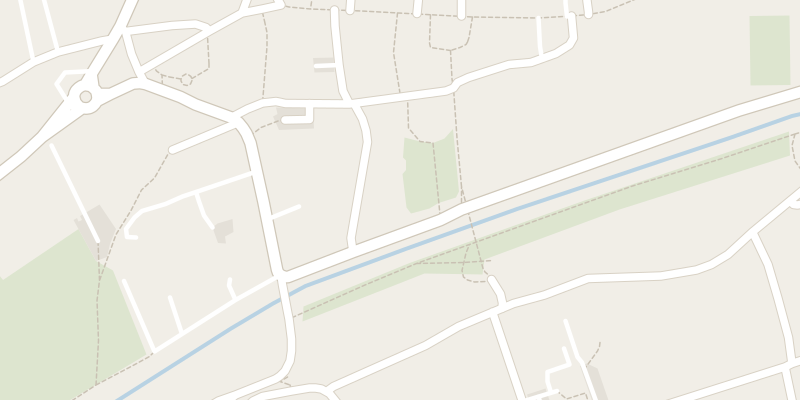
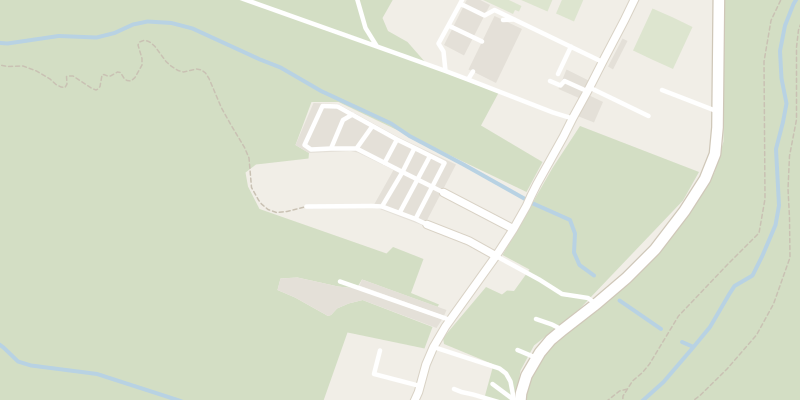
In Livigno, the ski area lists free open air car parks at the foot of its lifts, including one at the Carosello 3000 gondola and one at the Mottolino gondola. Open air means you should bring a snow brush and leave the chains in an easy place to reach.
Before you set off
A short checklist, built only from the rules above:
- Italy: winter tyres with the M+S marking, or chains that fit your tyres in the boot. Learn to fit them at home, on the driving axle.
- Italy: look up the ordinance of each road on your route, especially the last kilometres to the resort, where the dates can differ.
- Spain: chains in the boot, or 3PMSF tyres if you want to drive past an R-412 sign without stopping to fit them. Under an R-412b sign, only winter tyres are accepted.
- Spain: check the level of your route on the DGT website or by calling 011 before leaving, and keep left lanes free for snowploughs.
Frequently asked questions
Are winter tyres compulsory in Italy?
Are M+S tyres enough?
What does the R-412 sign mean in Spain?
On which wheels do chains go?
Can I drive in Spain when the snow level is red?
Sources
- Ministero delle infrastrutture e dei trasporti, Direttiva sulla circolazione stradale in periodo invernale (prot. 1580/2013)
- Polizia di Stato, obbligo degli pneumatici invernali
- ANAS, ordinanze obbligo catene a bordo o pneumatici da neve 2025-2026
- Autostrade per l'Italia, operazioni invernali
- BOE, Real Decreto 465/2025 (catálogo de señales, R-412 y R-412b)
- BOE, Reglamento General de Circulación, artículo 32
- DGT, niveles de circulación por nieve
- DGT, Instrucción 15/TV-87 (nivel rojo y amarillo)
- Revista DGT, neumáticos para el invierno
- Revista DGT, neumáticos de invierno y 3PMSF
- Courmayeur Mont Blanc Funivie, accesso e parcheggi
- Bormio Servizi, parcheggi a Bormio
- Skipass Livigno, parking
Checked against official sources on 2 October 2026. Report an error
Related articles
International Driving Permit: when you need one and how to apply
To drive outside the European Union and the European Economic Area, the DGT asks Spanish licence holders to carry the international permit together with their Spanish licence and passport. We explain when it is compulsory, how to apply, how long it lasts and in which countries the Spanish licence is enough.
7 min read ItalyItalian car MOT (revisione): deadlines, cost, fines and checks
In Italy a car's first revisione, the Italian equivalent of the MOT, is due 4 years after first registration, then must be repeated every 2 years. Here is where to get it done, what you pay at the Motorizzazione, what you risk driving with an expired test and how to check the date online.
7 min read SpainToll motorways in Spain and Vía T: a practical guide for 2026
Spain still has a network of state toll motorways split between private concessions and roads managed by SEITT, with toll rises since 1 January 2026. We explain which ones still charge, how Vía T works, which stretches are free and how to pay without surprises.
7 min read